When you're trying to build your dog's focus in high-distraction situations, it's essential to understand the various factors that might pull their attention away. You need to start by introducing controlled distractions slowly, ensuring your dog remains comfortable and engaged. Consistency in training routines plays a pivotal role, but how do you know when to increase the difficulty level? By incorporating positive reinforcement and recognizing stress signals, you can tailor each session to your dog's unique needs. But what happens when the usual methods don't seem to work, and your dog remains unfocused?
Understanding Dog Distractions
Distractions are everywhere, and they can greatly impact your dog's ability to focus. Whether it's a squirrel darting across the yard, a car driving by, or the smell of food, these stimuli can easily divert your dog's attention.
Understanding these distractions is essential for helping your dog maintain focus. Dogs, much like humans, have varying levels of sensitivity to different distractions. You might find that your dog is more distracted by movement than by sounds, or vice versa.
To understand what's distracting your dog, observe them in different environments. Pay attention to what catches their eye or what sounds make their ears perk up.
Is it the chatter of a nearby group, the rustling of leaves, or perhaps another dog barking? Identifying these triggers enables you to manage and anticipate distractions effectively.
Importance of Consistent Training
When it comes to building your dog's focus, consistent training is essential. You can't expect your dog to stay attentive in high-distraction situations if they don't have a solid foundation built through regular practice. By training consistently, you help your dog understand what's expected of them and reinforce good behavior. This repetition makes it easier for your dog to focus because they know the routine and the commands.
Consistency in training sessions also builds trust between you and your dog. When they know you'll be patient and persistent, they're more likely to engage and respond positively. Daily or regular training sessions create a sense of predictability, which dogs thrive on. Even short sessions can make a significant impact if you stick to them regularly.
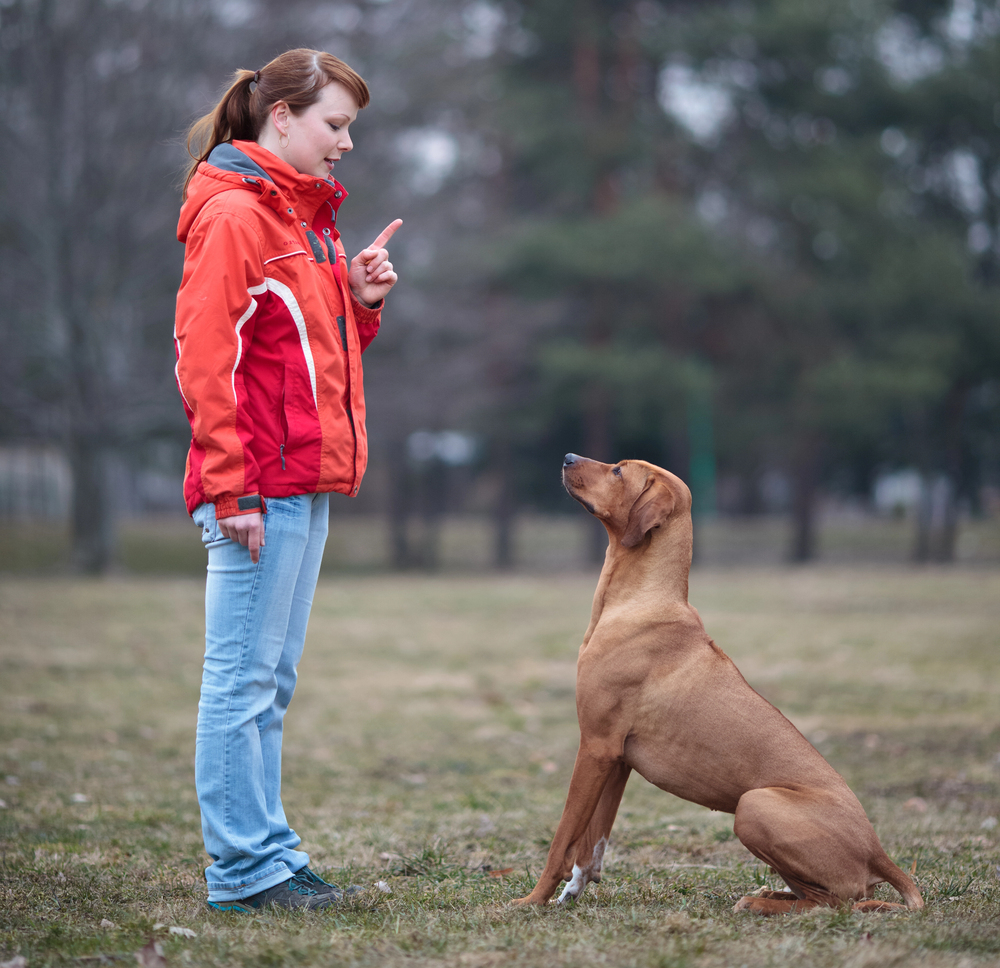
Moreover, consistent training helps you track your dog's progress. You can see what works, what doesn't, and adjust your techniques accordingly. This ongoing evaluation allows you to fine-tune your approach, ensuring your dog remains engaged and interested.
Choosing the Right Environment
Selecting the ideal environment for training your dog is essential for building their focus. Begin in a quiet, familiar setting where distractions are minimal. Your backyard or living room can be great places to start. These locations allow your dog to concentrate on you without external interruptions.
As your dog improves, gradually introduce more challenging environments. Once your dog shows reliable focus in familiar settings, shift to spaces with moderate distractions, like a quiet park. Verify this location is safe and that your dog feels comfortable. You want them to gradually adapt to new stimuli while still being able to pay attention to you.
When your dog consistently focuses in these moderately distracting environments, you can challenge them further. Try places with higher distractions, such as a busy park or sidewalk. Remember, each dog is different, so be patient and observe their reactions to confirm they're not overwhelmed.
Finally, always consider your dog's personality and energy levels when choosing environments. Some dogs may need more time to adjust to new settings, while others might thrive on novelty.
Using Positive Reinforcement
To successfully build your dog's focus, start by rewarding desired behaviors with treats or praise.
It's essential to maintain consistent training sessions so your dog understands what you expect.
Reward Desired Behaviors
Positive reinforcement is a powerful tool that helps reinforce your dog's focus and encourage good behavior. By rewarding desired behaviors, you make it clear to your dog what actions you want them to repeat. When your dog does something right, like sitting calmly in a busy park, immediately offer a treat or verbal praise. This immediate reward helps your dog associate the good behavior with positive outcomes, strengthening their focus even in high-distraction situations.
It's important to be consistent with your rewards. If your dog knows that sitting quietly gets them a treat, they'll be more likely to do it again. Make certain the reward is something they truly enjoy, whether it's a favorite snack or enthusiastic praise.
Timing is vital; give the reward right after the desired behavior to create a clear connection in your dog's mind.
Watch your dog's reactions to different rewards and adjust as needed. Some dogs might respond better to petting or playtime rather than treats. Don't forget to vary your rewards occasionally to keep your dog engaged.
Consistent Training Sessions
For effective training, establishing consistent sessions is key to developing your dog's focus. Training at the same time each day helps your dog know when to expect learning time, creating a routine they can rely on.
Start with short, focused sessions—about 5 to 10 minutes—and gradually increase the duration as your dog becomes more accustomed to the routine. Consistency helps your dog understand what's expected and reduces confusion during high-distraction situations.
Use positive reinforcement to encourage your dog's focus during these sessions. Reward them with treats, praise, or play whenever they successfully complete a task or maintain attention. This reinforces the behavior you want to see and builds a positive association with training.
Remember, your tone matters; keep it upbeat and encouraging to motivate your dog.
Be patient and observant. If your dog seems overwhelmed, it might be time to take a break or adjust the environment to reduce distractions.
Training is a process, and every dog learns at their own pace. By maintaining consistency in your sessions, you're setting up a strong foundation for your dog to focus even in the most distracting environments.
Incorporating Focus Exercises
One of the most effective ways to enhance your dog's focus is by incorporating targeted exercises into their daily routine.
Begin with simple games like "find it," where you hide treats and encourage your dog to sniff them out. This not only sharpens their concentration but also engages their natural instincts.
Another great exercise is "look at me," where you hold a treat near your eyes and reward your dog when they maintain eye contact. This helps them learn to focus on you, even when distractions are present.
Training with a clicker can also be incredibly effective. Use the clicker to mark moments when your dog remains focused on a task or obeys a command promptly. The sound acts as a precise indicator of desired behavior, making it easier for your dog to understand what you expect.
Incorporate short bursts of focus training into walks by asking for simple commands like "sit" or "stay" amidst the sights and sounds of your neighborhood. This reinforces their ability to listen to you despite distractions.
Building Incremental Challenges
As your dog becomes more adept at basic focus exercises, it's important to gradually introduce incremental challenges to keep them engaged and progressing. Start by slightly increasing the level of distraction in a controlled environment. For example, if your dog is used to focusing in a quiet room, add mild background noise like a radio or soft chatter. Watch how your dog responds and adjust the difficulty accordingly.
Next, vary the duration of the focus exercises. Encourage your dog to maintain eye contact or stay on task for a few seconds longer each session. Use treats or toys as rewards when they successfully meet these new time goals. By doing this, you're reinforcing their ability to concentrate for extended periods.
Additionally, introduce novel elements to the exercises. Change locations or rearrange familiar settings to create new challenges without overwhelming your dog. Start with small changes like moving to a different room or adding a new toy to the mix. Gradually increase complexity as your dog gains confidence.
Finally, remember to praise and reward your dog frequently. Maintaining a positive experience encourages your dog's willingness to tackle more challenging situations in the future.
Utilizing Distraction-Control Tools
To enhance your dog's focus, start by implementing focused training sessions that are free from distractions.
Gradually increase the levels of distraction as your dog becomes more adept at maintaining attention.

Don't forget to utilize high-value rewards to motivate and reinforce positive behavior throughout the process.
Implement Focused Training Sessions
Training your dog's focus is an art that demands precision and the right tools. To implement focused training sessions, you must create an environment that minimizes distractions. Start by selecting a quiet area where your dog can concentrate without external interruptions.
Use distraction-control tools, like a leash or a boundary mat, to help your dog understand their training space. These tools serve as physical reminders, reinforcing the idea that it's time to focus.
Incorporate short, engaging sessions into your routine. Keep each session between five to ten minutes to maintain your dog's interest and prevent boredom. Use high-value treats or toys as rewards to encourage their attention.
When your dog responds well, reinforce the behavior immediately with positive reinforcement. This immediate feedback helps them associate focus with rewards.
Make sure to practice commands like "sit," "stay," or "watch me" during these sessions. Consistency is key. The more you practice, the better your dog will become at maintaining focus, even when distractions arise.
Gradually Increase Distraction Levels
Once your dog is comfortable focusing in a controlled environment, it's time to raise the stakes by introducing distractions. Start small and gradually increase the complexity. Begin with mild distractions like a toy placed a few feet away. Use a leash to maintain control and gently guide your dog back to focus when their attention drifts. This helps reinforce that focus is necessary, even when interesting things are happening around them.
You can also use distraction-control tools like barriers or gates to limit their access to distractions. This gives you more control over the environment and allows you to introduce distractions at a pace that's comfortable for your dog. Start by allowing a visual distraction, like a person walking by, and progress to more dynamic ones, like another dog playing in the distance.
Introduce auditory distractions next. Play recorded sounds of barking dogs or traffic at a low volume, gradually increasing the noise level. The key is to guarantee your dog remains focused despite these new elements.
Consistency is essential, so regularly practice in varied settings, slowly introducing new distractions. This way, your dog learns to maintain focus no matter the situation, building their confidence and yours.
Utilize High-Value Rewards
Rewarding your dog's focus with high-value treats can greatly enhance their ability to concentrate, especially when distractions are present. When your dog knows there's something extra special for staying focused, like a piece of chicken or cheese, they're more likely to pay attention to you instead of the chaos around them.
Start by identifying what your dog considers a high-value treat. It's different for every pup, so try a few options to see what gets their tail wagging.
Once you've found the right treat, use it strategically. When you're in a distracting environment, keep the high-value rewards handy. As soon as your dog starts to focus on you amidst the distractions, reward them promptly. This immediate reinforcement helps them associate focusing on you with receiving something they love.
Make sure to praise them verbally as well; your enthusiastic tone reinforces the positive behavior.
Implementing Short Training Sessions
Incorporating short training sessions into your routine can greatly enhance your dog's focus and responsiveness. By keeping each session brief, around 5 to 10 minutes, you prevent your dog from becoming bored or overwhelmed. This approach helps maintain their enthusiasm and guarantees that they're always willing to engage with you.
It's crucial to concentrate on one or two commands per session, allowing your dog to master each skill without feeling pressured. During these short sessions, choose a time when your dog is naturally alert but not overly excited. If you've just returned from a walk or playtime, it might be an ideal moment to practice some commands.
Consistency is key. Try to fit these brief training moments into your daily schedule, making sure your dog learns to anticipate and enjoy them. Use positive reinforcement, like treats or praise, to reward focus and correct execution.
Keep distractions to a minimum at first, gradually increasing them as your dog's attention improves. By implementing this method, you'll find that your dog becomes more responsive, even in high-distraction environments, as they learn to focus their attention on you.
Recognizing and Managing Stress
To help your dog maintain focus, it's essential to recognize stress signals like yawning, lip licking, or pacing.
Once you identify these signs, implement calming techniques such as gentle petting or creating a quiet space.
Additionally, reduce environmental triggers by minimizing loud noises or unfamiliar settings that might unsettle your dog.
Identifying Stress Signals
When building your dog's focus, recognizing stress signals is vital for fostering a calm and attentive companion. Dogs exhibit various signs when they're stressed or overwhelmed, and being able to identify these signals helps you address their needs before they escalate.
Look for subtle cues like yawning, licking lips, or suddenly scratching. These are often early indicators that your dog might be feeling uneasy.
Panting excessively when it's not hot or your dog hasn't been active is another sign https://alternativek9training.wordpress.com/ of stress. Additionally, keep an eye on their body language; if their ears are pinned back or their tail is tucked, they're likely experiencing discomfort.
Whining, barking, or growling can also indicate stress, especially if these behaviors aren't typical for them in that context.
It's important to observe your dog's eyes. Wide, dilated pupils or the appearance of "whale eye," where you can see the whites around the eyes, suggest anxiety.
Implementing Calming Techniques
Once you've identified the stress signals in your dog, it's time to implement calming techniques to help them manage stress effectively.
Start by using deep pressure therapy, which can be as simple as gently wrapping your arms around them or using a snug-fitting jacket. This constant pressure can have a soothing effect, similar to swaddling a baby.
Next, introduce slow, deep breathing exercises. You can model this by taking deep breaths yourself, encouraging your dog to mirror your calm demeanor. Consistent practice can help them associate these moments with relaxation.
Another technique is to create a calm environment through sound. Soft classical music or white noise can drown out disruptive sounds and promote tranquility.
It's essential to give your dog a safe space where they feel secure, like a quiet room or a cozy corner with their favorite blanket or toy.
Engage their senses positively by offering a gentle massage, which can relax tense muscles and improve circulation.
Always pay attention to their reactions, as some dogs might prefer different types of touch. By incorporating these calming techniques, you'll help your dog manage stress, improving their focus even in high-distraction situations.
Reducing Environmental Triggers
A dog's environment plays an essential role in their stress levels, and reducing potential triggers can greatly enhance their focus and well-being. Start by observing your dog's reactions to different stimuli in their surroundings. Are certain noises, sights, or even smells causing them to become anxious or distracted? Identifying these triggers is the first step in managing stress effectively.
Once you've pinpointed stressors, work on minimizing their impact. If loud noises like traffic or construction bother your dog, consider strategies like using white noise machines or playing calming music.
For visual triggers, try rearranging furniture to block outside views that might provoke anxiety, or use curtains and blinds to limit exposure.
Create a safe space for your dog where they can retreat from overwhelming situations. This area should be quiet, comfortable, and filled with familiar items like their bed or favorite toys.
It's vital to maintain consistency in your dog's routine, as predictability can greatly reduce stress.
Finally, practice positive reinforcement during training sessions to encourage focus despite distractions. Reward your dog with treats or praise when they respond calmly to triggers, reinforcing desired behaviors and building confidence.
Monitoring and Adjusting Techniques
To effectively build your dog's focus, keeping an eye on their progress and adjusting training techniques is essential.
Begin by observing your dog's reactions during training sessions. Are they attentive, or do they get distracted easily? Note these behaviors to understand what works and what doesn't. If you notice your dog struggling in a particular environment, it might be time to tweak your approach.
Adjusting techniques involves changing the difficulty of tasks based on your dog's performance. If they're consistently successful, increase the challenge by adding distractions gradually. Conversely, if they seem overwhelmed, simplify the task or reduce the distractions to set them up for success.
Use positive reinforcement to motivate and reward your dog for maintaining focus. Praise, treats, or toys can be effective incentives.
The key is to remain flexible and patient, adapting your methods to suit your dog's unique needs.